

William Gibson "Burning Chrome"
Collection Review
 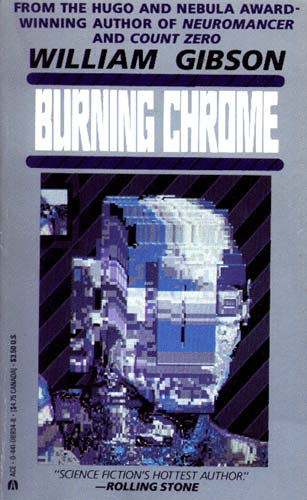 William Gibson "Burning Chrome" Collection - FULL REVIEW: ---------------------------------------------- "Burning Chrome" (coll) © 1986, Arbor House --collection : 1987 Locus /2 --/ second place sf collection --/ wonder award --/ style award --/ idea award Cyberpunks are dead, long live steampunks... cowpunks... softpunks... biomorph punks... yogurt punks... and cream cheese ones, too. It is easy to laugh now, looking back twenty (or thirty) years, remembering the shock of encountering a brand new sub-genre of literature, and a crazy one to boot. Gibson might not have been the first, but he was the most intense, with a slightly mad sparkle in his eye, going in the front of the (now respectable) cyberpunks, splattering words like "cyberspace", "web cowboy", "hacker's ice" all over the reader's innocent face, breaking established styles and motives, and emerging as a genius of huge lyrical (yes, lyrical!) and visionary magnitude. Nobody calls his cohort "cyberpunks" any more, the alternative became the mainstream (same as in music today). This is a seminal collection, issued at the same time as the classic "Mirrorshades" anthology. 1986 was the year when cyberpunk "made it" to the shelves and the critic's approval in one sparkling "download". The recent "Matrix" movies took the veil of enigmatic beauty off the futuristic hacker's lifestyle, and made it commonplace. The good old books and stories, however, did not lose any of the punch and excitement. Still the best, by far. And if cyberpunks are not in vogue anymore, what is? what is next? Well, read the first sentence of this review again. Maybe the anti-consumerism grocery monster stories? We shall see. review: 31-Aug-06 (read in 1997) ---------------------------------------------- 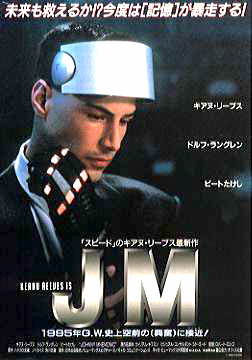 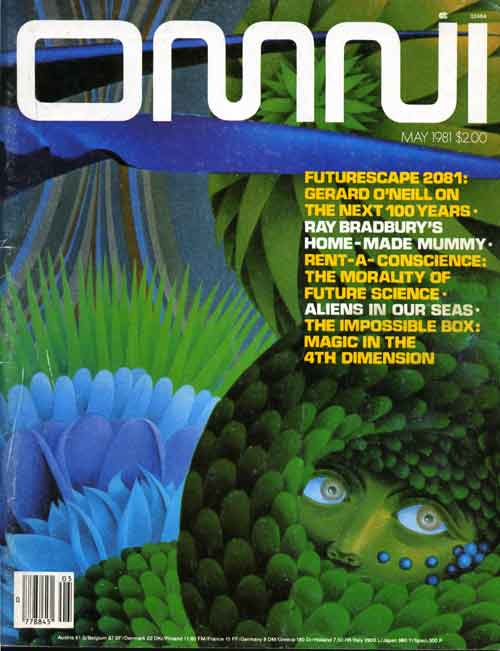 "Johnny Mnemonic" (Molly Millions series) © OMNI, May 1981 Burning Chrome, 1986 --short story : 1982 Nebula --novelette : 1982 Locus /20 --/ fourth place sf story --/ wonder award --/ style award Instant classic. Take the cereal bytes of hard-crunched computer code, add the honeyed milk of your imagination, and... smother it all in mustard. Yuk. Take the miracle digestion pill of a writer's incredible way with words - and you'll discover that you can eat it for breakfast after all. However, I found it worth reading only once, as it loses something on re-reading. Of course, they made it into a movie, with Keanu Reaves wisely cast as a fumbling hacker lost in the mazes of an Asian metropolis. The movie did not do it for me, but this story already has all the elements of Gibson's and the Matrix world: a spooky mega-bridge, looming over the city as its own mini-universe, a circle of shimmering monitors, aquatic bio-engineered freaks, and the perennial questions of "what reality is" and "who stole my hard drive". Not bad. review: 31-Aug-06 (read in 1997) 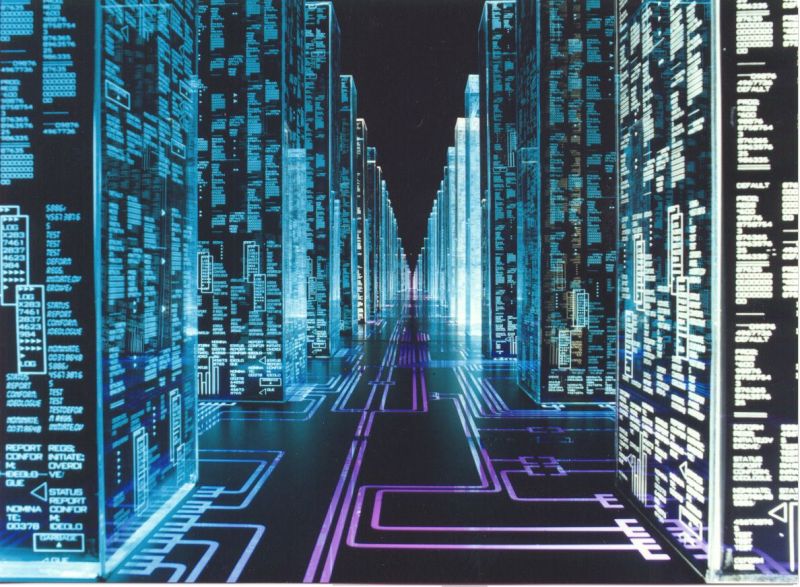 3D virtual navigation, as imagined in 1986 ---------------------------------------------- 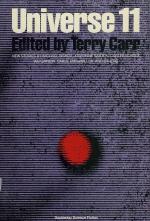 "The Gernsback Continuum" © Universe # 11, 1981 Burning Chrome, 1986 --short story : 1982 Locus /24 --/ third place sf story --/ wonder award --/ idea award --/ emotion award This is a story which needed to be written long time ago - a hymn to "retro-future", gone but fondly remembered. The futuristic images from the thirties and forties illustrations paint the kind of future that will never be - at least stylistically speaking. Streamlined buildings and rocketlike flying cars, imperial architecture, art-deco and gothic elements splashed with chrome and served on a grandiose scale - when we look at these illustrations from the early pulps (or various "Futurama" photos from the Fifties) we feel some deep strange longing rise up inside us. A desire for such retro-future to occur in reality, against all odds of technology and logic; a future somehow more exquisite and noble than the one we see ahead of us. This wish is fulfilled in this story. Due to some quirk in the continuum, the cumulative dream of the Gernsbeck era (or rather the Thirties' concept designs) comes to life and starts to haunt our present for real... Somebody should make an animated masterpiece based on this. The movie "Sky Captain" came close, but it hardly matches the pomp and scale of the original "fever dreams" of fantastic art Michelangelos. review: 2-Sep-06 (read in 1989) ---------------------------------------------- 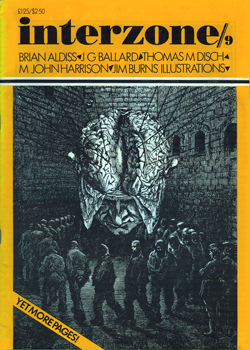  "Fragments of a Hologram Rose" © UnEarth, Sum 1977 Interzone, Aut 1984 Burning Chrome, 1986 --/ fourth place sf story --/ style award A moody, sharp-edged interlude, a cyberpunk "still life" of sorts, that made its way into a novel but still stands out on its own. To understand Gibson's writing, sensibilities, and paradigm you have to be equally fascinated with an intense urban culture (such as of Japanese cities; the photograph below gives you an idea of some of their "cool congestion") and frustrated by the plainness of middle class American lifestyle, lost in an infinity of strip malls. Add frenetic, restless imagination, "noir" mood and pulp action, and you'll get a poetry of neon-lights and metaphors of concrete that will either unravel or "cement-frieze" your soul. review: 2-Sep-06 (read in 1989)  (original unknown) Japanese urban landscape example. ---------------------------------------------- 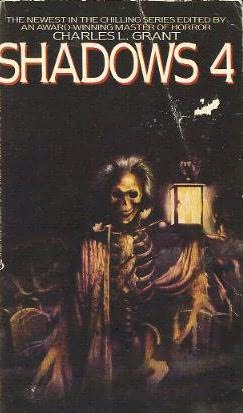 "The Belonging Kind" (with John Shirley) © Shadows # 4, Charles L. Grant, 1981 Burning Chrome, 1986 --/ fourth place sf story --/ wonder award --/ idea award Exploring a different landscape here: that of an estranged human soul among a senseless social scene, the alienation vs. adaptability of our beleaguered "self" in a cold urban environment. It does not have a typical Gibson setting (such as "Sprawl", where most of his novels and stories take place) It is also perhaps William Gibson's only venture into the horror genre (guided by the capable John Shirley, who is certainly not a stranger to the murky and weird literary underground). It tells of a strange transformation from human to... something else. A guy meets a girl in a bar, follows her to another bar, and notices that along the way, she has morphed into someone completely different. It turns out to be the "adaptability" technique of a a weird alien kind, but very useful in our society, making our guy obsessed with it and desiring it above anything else. review: 2-Sep-06 (read in 1989) ---------------------------------------------- 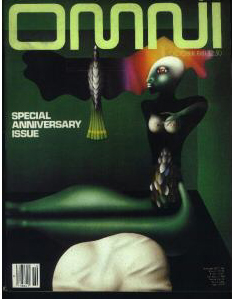 "Hinterlands" © OMNI, Oct 1981 Burning Chrome, 1986 --short story : 1982 Locus /21 --/ third place sf story --/ wonder award --/ style award --/ idea award --/ adventure award A winner. This story stands well above standard SF fare, as it combines the blockbuster qualities of the best pulp-style space adventure with fringe culture sensibilities (such as collecting alien garbage artifacts on a huge space station and trying to make a sense out of them). It has great visual intensity and a smooth writing style. I had a blast reading it in 1987, comparing it in my mind with such works as Pohl's "Gateway", Strugatskie's "Roadside Picnic", and generally squeaking in delight after every other paragraph. Cool stuff. Contact with aliens is shown as a totally incomprehensible event, prone to drive possible "artifact prospectors" nuts. As one such Gold Rush character says in this story: "The contact with 'superior' civilization is something that you don't wish on your worst enemy" review: 2-Sep-06 (read in 1987) ---------------------------------------------- 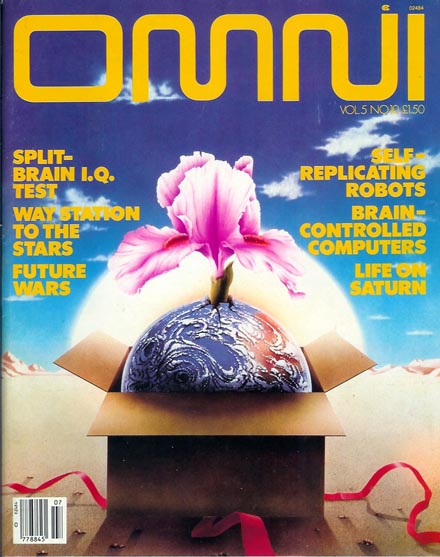 "Red Star, Winter Orbit" (with Bruce Sterling) © OMNI, Jul 1983 Burning Chrome, 1986 --novelette : 1984 Locus /19 --/ fourth place sf story --/ wonder award --/ style award --/ adventure award Great subject matter from the Eighties: the story is set on an aging Soviet space station and deals with some crazed Russian cosmonauts who stayed in orbit for too long. Another good example of such an affront to the pride of Soviet Space Program would be the similar episode in the movie "Armageddon", where the crazed cosmonaut is shown truly "spaced out" and very probably drunk. It is still "a mystery of mysteries" to me, how quite miserable Soviet technology could meet the demands of Russian ambitions in space (or how the rudimentary Sixties computers could put Americans on the Moon). It's almost like the mechanisms and chips themselves smarten up and begin to work better when hearing phrases like "the last frontier" or "the will of the people". Come to think of it, I'm amazed even by the consistent performance of millions of contacts and hundreds of chips in a normal fighter jet. So many things could go wrong and yet they rarely do. review: 2-Sep-06 (read in 1987) ---------------------------------------------- 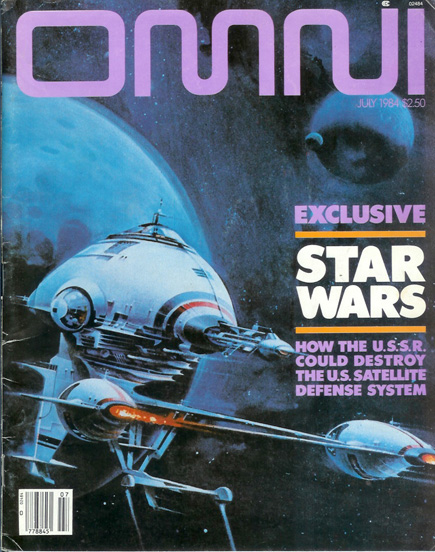 "New Rose Hotel" © OMNI, 1981 Burning Chrome, 1986 --short story : 1985 Locus /19 --/ fourth place sf story --/ wonder award --/ style award Corporate espionage, international crime, the lure of a technological frontier and dark premonitions of technology's ultimate failure - all that makes for a good "noir fiction" experience. I would even trace Gibson's edgy narrative style to Dashiell Hammett, Raymond Chandler and Robert Leslie Bellem. It's fascinating to follow the laconic murderous remarks of haunted characters to their over-the-top action conclusions, and to revel in a convoluted, grand (but often scandalously absurd) plot. review: 2-Sep-06 (read in 1987) ----------------------------------------------  "The Winter Market" © Vancouver Magazine, Nov 1985 also in - Stardate, 1986 also in - Interzone, Spring 1986 Burning Chrome, 1986 --short-form, English : 1986 Aurora --novelette : 1987 Hugo --novelette : 1987 Nebula --novelette : 1987 Locus /4 --short story : 1987 British SF --fiction : 1987 Interzone Poll /3 --novelette : 1987 SF Chronicle/2 (tie) --/ third place sf story --/ wonder award --/ style award --/ adventure award In many ways this story anticipates Gibson's later book "Idoru". Editing neural output became a part of the lucrative business that has replaced records and movies. Editors and virtual stars run the risk of the total dissolution of their entities, as they gradually upload their consciousness into a computer. Virtual entertainment can be quite a "soul-deadening" affair. review: 2-Sep-06 (read in 1987) ---------------------------------------------- 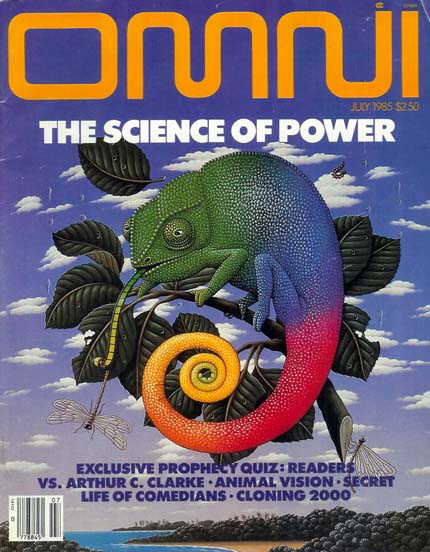 "Dogfight" (with Michael Swanwick) © OMNI, Jul 1985 Burning Chrome, 1986 --novelette : 1986 Hugo --novelette : 1986 Nebula --novelette : 1986 Locus /5 --novelette : 1986 SF Chronicle /2 --/ fourth place sf story --/ wonder award --/ style award "Top Gun" meets "A Scanner Darkly". A darkly intense tale about fighter jet "flight simulation/virtual reality" warfare. Quite predictable, but lively and very cinematic. Ultimately forgettable joint effort between two giants in the field... produced a mouse, albeit with airscoops and ailerons :) review: 2-Sep-06 (read in 1987) ---------------------------------------------- 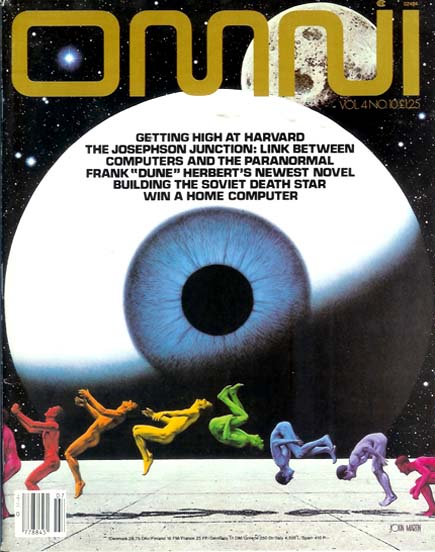 "Burning Chrome" © OMNI, Jul 1982 Burning Chrome, 1986 --novelette : 1983 Nebula --novelette : 1983 Locus /17 --novelette : 1983 SF Chronicle /3 --novelette : 1999 Locus All-Time Poll /13 --/ fourth place sf story --/ wonder award --/ idea award --/ adventure award A military-grade hacking virus vs. a corporate website. Sounds not very exciting, but believe me, the effect of this story is comparable to blowing up a thick computer manual: big, bold, quick and loaded with deep (though jumbled) technological meaning. This story has the general look and feel of "Neuromancer", "Count Zero" and other Sprawl series novels. Another significant "brick in the wall" of Gibson's world-building again gives us many thrills, many dangers and very few hopes in a very inhuman future society. Worthy to read due to the sheer pyrotechnics and exuberance of style. Great summer blockbuster entertainment. review: 2-Sep-06 (read in 1987) ---------------------------------------------- WITHOUT A DOUBT ONE OF THE MOST INFLUENTIAL COLLECTIONS IN SF HISTORY. Labels: Collection, Features |
Click to go to "Dark Roasted Blend" site
Your Comments:
|
|
0
comments
 |
|

|
Collecting Pulp Magazines Ephemera Interview with Avi Abrams |

|
Enchanting Victorian Fairy Tale Art "Then world behind and home ahead..." |

|
Exceptional British Scifi Artwork from the 1950s Space Pulp Art by Ron Turner and other British artists |

|
Pulp Pleasures: Eando Binder Great space adventure fiction from the 1930s "Where Eternity Ends" and other rare gems |
Also read recent posts:
Author's Pen Names - Most Complete List Ever
The Wonder Timeline: SF&F Restrospective
Space Adventure Article
|
"SF&F Reading Experience" is part of "Dark Roasted Blend / Thrilling Wonder" family of sites. We try to highlight the most entertaining and rewarding science fiction and fantasy, with emphasis on memorable reader experience, not necessarily general acceptance by the critics. Have fun, and delve into our extensive ratings and reviews! Most reviews are written by Avi Abrams, unless otherwise noted. Reviews also appear on our unique historical retrospective page Wonder Timeline of Science Fiction. Feel free to submit your own review, if a particular story is not listed here. All major OFFICIAL AWARDS are highlighted in BLUE ("winner" has a letter "W" by it, otherwise it is a runner-up only) Our PERSONAL AWARDS (ratings) are highlighted in RED and PURPLE: --/ first place : --/ second place : --/ third place : --/ fourth place : --/ cool : (equal to fifth place) ALL "BEST OF" LISTS ARE LOCATED HERE These awards are given in the following categories: - novel : - series : - novella : - story : - collection : Also, there are our personal STYLE / GENRE SPECIFIC AWARDS. These reflect the story's content and the lasting impression on the reader: --/ wonder award sense-of-wonder, "visual intensity" and inventiveness --/ idea award originality of idea / concept --/ adventure award exhilarating plot, excitement / action --/ style award outstanding literary qualities, inimitable style --/ romance award intense and beautiful love / relationships --/ humour award funny and cool --/ emotion award touching, lasting impression, sensitivity --/ shock value altogether wild --/ awesome scale mind-boggling; further enhances sense-of-wonder --/ rare find very hard to locate, mostly from old pulps, never reprinted, etc. Again, please feel free to leave your own review or comment under every writer's entry; also recommend us other stories you liked. |


0 Comments:
Post a Comment
<< Home